- Home
- About Company
- Our Products
- Brochure
- Career
- Gallery
- Contact US
Fully Auto Flat Bottle
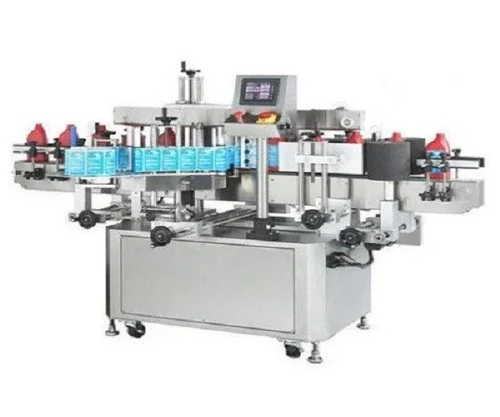
A fully automatic flat bottle labeling machine is
a high-speed, automated piece of equipment that precisely applies self-adhesive labels to flat-sided bottles. These machines use a single-point synchronized speed control system and features like automated label length detection to increase efficiency and accuracy, eliminating the need for manual data entry for label changes. They are used across various industries, including food, pharmaceutical, and cosmetics, to label products like those made from glass, plastic, PET, and aluminum.
Key features
- High speed and accuracy: Capable of high production speeds (e.g., up to 120-200+ labels per minute, depending on product and label size) with precise, consistent label application.
- Automated control: Utilizes a PLC (Programmable Logic Controller) and a touch-screen HMI (Human-Machine Interface) for intelligent and automated operation.
- Automated label handling: Includes features like automatic label length detection to eliminate manual data input and reduce downtime during label changes.
- Flexibility: Can label a wide range of flat bottles (and sometimes round or elliptical ones) and can apply one or more labels to a single product.
- Product stabilization: Employs systems like a top-holding belt to ensure stable and vertical positioning of bottles for accurate labeling.
- Smart sensing: Features sensors for product and label detection, with some models including vision cameras for quality inspection and rejection detection.
- Durable construction: Often built with stainless steel (

SS 304cap S cap S space 304
𝑆𝑆 304) and other robust materials for long-lasting operation. - Optional features: Can be equipped with coding systems (like inkjet or hot foil) to print production information directly onto the label or product.
How it works
- Bottle feeding: Bottles are fed onto the conveyor belt.
- Bottle alignment: An automated system, such as a synchronized twin-pocket or a top-holding belt, ensures the bottles are correctly positioned and stabilized as they move.
- Label dispensing: The machine detects the product and dispenses a label onto the flat surface.
- Label application: A roller or belt system applies the label to the bottle, with the speed of the label dispenser, conveyor, and applicator synchronized.
- Inspection: Sensors check for correct label application, and some systems can perform quality checks.
- Output: Labeled bottles move on to the next stage of the production line.